
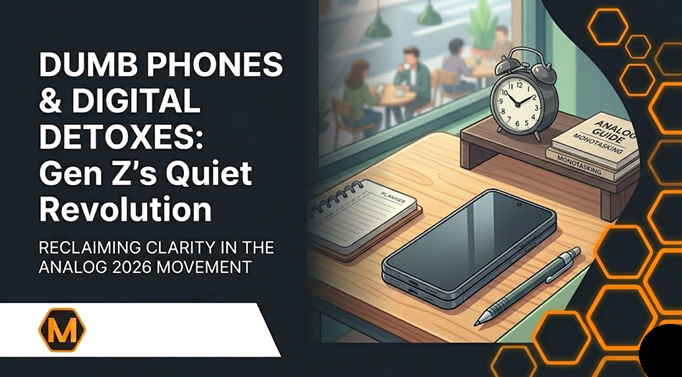
In a world where our pockets constantly buzz with the latest “slop” from social media algorithms, a quiet revolution is taking place. If you walk into a trendy coffee shop in 2026, you might be surprised to see 20-somethings rocking Nokia 3310s or sleek, minimalist “Light Phones” instead of the latest flagship smartphones. This isn’t just a retro fashion statement like baggy jeans or vinyl records; it’s a survival tactic. Gen Z, the first truly digital-native generation, is leading the charge in the “Analog 2026” movement, reclaiming their attention spans from the dopamine loops of the smartphone era.
The shift toward digital minimalism isn’t just about escaping a specific app; it’s about reclaiming mental clarity. Many students are finding that constant notifications make it impossible to focus on complex subjects, leading them to research Health Essay Topics on platforms like myassignmenthelp to understand the physiological impact of screen addiction on the developing brain. By swapping a glass rectangle for a device that only calls and texts, young adults are reporting lower levels of anxiety and a newfound ability to “monotask”—the rare art of doing one thing at a time without checking a screen every 40 seconds. This intentional disconnection is becoming a status symbol of discipline in an age of constant distraction.
1. The Rise of the “Boring” Phone: Why Less is More
What exactly is a “dumb phone”? In the tech world, these are known as feature phones. They lack App Stores, high-refresh-rate screens, and the infinite scroll that keeps us awake at 3 AM. For Gen Z, the appeal lies in what these phones don’t do. They don’t track your location 24/7, they don’t serve you targeted ads based on your private conversations, and most importantly, they don’t make you feel like you’re missing out on a life you never had.
The “Dumb Phone Trend 2026” is rooted in the realization that we have reached “peak screen.” When every waking moment is monetized by a tech giant, choosing a device with a monochrome screen and a physical keypad feels like an act of rebellion. It’s about intentional living. Instead of “doomscrolling” through a crisis on the other side of the world while trying to eat breakfast, users are picking up hobbies that require physical presence—painting, hiking, or simply sitting in silence.
The Psychology of Minimalist Hardware
The psychological relief of a dumb phone is almost immediate. Without the “phantom vibration syndrome” (the feeling that your phone is vibrating when it isn’t), the brain’s cortisol levels begin to stabilize. Gen Z has realized that being “reachable” 24/7 is not a requirement for a successful life; it is a recipe for burnout. By limiting communication to voice calls and basic SMS, the quality of interactions actually improves. Conversations become more meaningful because they aren’t interrupted by a flurry of Instagram likes or email previews.
2. The Science of the Dopamine Detox
To understand why this movement is gaining so much traction, we have to look at the “Dopamine Loop.” Modern smartphones are designed by world-class neuroscientists to trigger small hits of dopamine—the feel-good chemical—every time we see a red notification bubble or pull down to refresh a feed. Over time, our brains become desensitized, requiring more and more screen time just to feel “normal.” This is why you might find yourself opening an app you just closed five seconds ago without even thinking about it.
A digital detox helps reset these neural receptors. By removing the constant stimulation, Gen Z is finding that their natural curiosity and creativity are returning. They are rediscovering the “boredom” that used to spark great ideas. However, this transition isn’t always easy, especially when academic or professional pressures remain high.
Managing Stress During the Transition
The first week of a digital detox is often the hardest. You might feel a sense of FOMO (Fear of Missing Out) or irritability. This is essentially a withdrawal symptom from the high-stimulation environment of the internet. During this time, it is vital to have support systems in place. Many find that while they enjoy the offline lifestyle, they still need professional Essay Help to manage their heavy workloads during their transition to a more balanced, offline life, ensuring their grades don’t suffer while they fix their mental health.
3. The “Analog 2026” Lifestyle: Beyond the Phone
The digital detox trend isn’t limited to just phones. It has birthed a whole “Analog 2026” lifestyle that prioritizes tactile experiences over digital ones. We are seeing a massive resurgence in:
- Film Photography: Using disposable or 35mm cameras where you can’t see the photo until it’s developed.
- Paper Planners: Moving away from Google Calendar to physical notebooks.
- Physical Books: The sales of e-readers are dipping as people crave the smell of paper and the lack of blue light.
- Manual Hobbies: Gardening, woodworking, and knitting are no longer just for grandparents; they are the new “cool” for 20-somethings looking to ground themselves in reality.
This movement is a response to the “flattening” of culture. On a screen, everything—a tragedy, a joke, an ad—looks the same. In the physical world, things have texture, weight, and consequence.
4. Practical Steps: How to Transition Without Losing Your Mind
If you’re considering joining the movement, you don’t have to throw your smartphone in the river immediately. Most successful “Digital Detoxers” follow a hybrid path that allows them to stay functional in a modern world while protecting their peace.
| Strategy | Action Step | Goal |
| The Weekend Swap | Move your SIM card to a flip phone on Friday night. | Full presence with friends and family. |
| The Gray-Scale Hack | Turn your smartphone screen to black and white in settings. | Makes apps like TikTok look unappealing. |
| Notification Purge | Delete every app with a “feed” (Instagram, X, Facebook). | Stop the “pull-to-refresh” addiction. |
| Tech-Free Zones | No phones in the bedroom or at the dinner table. | Better sleep and better digestion. |
The goal of the movement isn’t to become a hermit or a Luddite. It’s to ensure that technology serves us, rather than us serving the technology. It’s about being “pro-human” rather than “anti-tech.”
5. The Academic Impact: Focus Over “Phubbing”
“Phubbing”—the act of snubbing someone in a social setting by looking at your phone—has become a major social taboo among the more conscious circles of Gen Z. This social shift is bleeding into the classroom and the library. Professors are noting that students who embrace digital minimalism are more likely to engage in deep-dive research and critical thinking.
When you aren’t distracted by “Vibe Coding” trends or viral memes, your brain has the “RAM” available to tackle difficult dissertations and complex theses. In 2026, focus is the new IQ. Those who can sit with a difficult problem for three hours without checking their phone will eventually run circles around those who are constantly “multitasking” (which, scientifically, is just rapid task-switching that lowers your effective IQ by 10 points).
Solving the “Focus Crisis”
For many students, the damage to their attention spans is already done. Rebuilding the “muscle” of concentration takes time. While you are retraining your brain to focus on long-form reading and writing, it is perfectly acceptable to seek expert guidance. Using a service to help structure your thoughts or provide a roadmap for a complex project can bridge the gap while you regain your cognitive independence.
6. The Aesthetic of the 90s and Y2K Comeback
We cannot ignore the role of aesthetics in this trend. The “Y2K tech aesthetic” is massive right now. Gen Z views the technology of the late 90s and early 2000s as “charming” and “human-centric.” Unlike the sterile, minimalist designs of modern Apple or Samsung products, old-school tech had personality.
Translucent plastic, bright colors, and physical buttons offer a haptic feedback that a touchscreen simply cannot replicate. This “Retro Tech Comeback” is about more than just utility; it’s about a longing for a time when the internet was a place you went to (on a desktop computer in the hallway) rather than a place you lived in.
7. Is the “Dumb Phone” Here to Stay?
Critics argue that this is just a passing phase—a trend that will fade as soon as a new, even more immersive technology like AR glasses becomes mainstream. However, the data suggests a deeper shift. Sales of feature phones have seen a steady climb for three consecutive years. More importantly, the feeling of being offline is addictive in its own right. There is a profound sense of freedom in knowing that no one can reach you with a “low-priority” tag while you’re enjoying a sunset or a conversation.
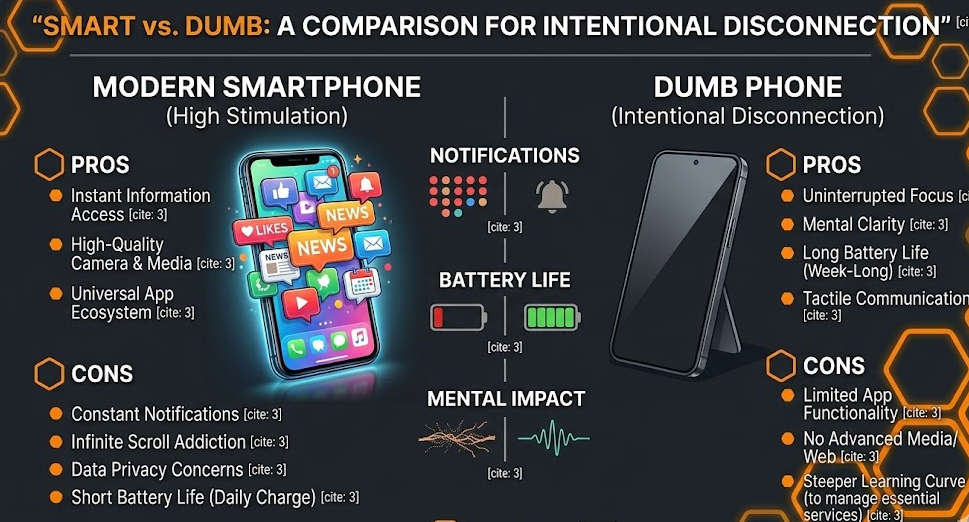
The “Dumb Phone” isn’t a step backward; it’s a step toward a more sustainable relationship with the digital world. It is the “slow food” movement of the tech industry. Just as people realized that fast food was killing their bodies, they are now realizing that “fast content” is killing their minds.
8. Environmental and Privacy Benefits
Beyond mental health, two other major drivers are pushing Gen Z toward simpler tech: Privacy and Sustainability.
- Privacy: Smartphones are essentially tracking devices. In an era where data privacy is non-existent, a phone that doesn’t have a GPS or a dozen apps reporting your behavior is the ultimate privacy tool.
- Sustainability: Feature phones often have batteries that last for a week and are much easier to repair. They don’t have the “planned obsolescence” of smartphones that slow down after two years to force an upgrade.
9. Conclusion: The Ultimate Luxury of 2026
If you’re a student or a young professional, the pressure to be “always on” is intense. But remember: your value isn’t measured by your response time to a DM or how many notifications you managed to clear before noon. In 2026, the ultimate luxury isn’t the fastest 6G connection or a phone with four cameras; it’s the ability to disconnect entirely and still succeed.
By choosing a digital detox, you aren’t falling behind. You’re giving yourself the mental space to leap ahead. Whether you’re writing a life-changing essay, studying for a PhD, or building the next great startup, a clear, undistracted mind is your greatest asset. The “Dumb Phone” is just the tool; the real product is a better version of you.
So, next time you feel the itch to refresh your feed for the hundredth time, consider this: maybe the most productive thing you can do today is put the phone in a drawer, go outside, and let your brain remember what it’s like to breathe.
Frequently Asked Questions
What is a “dumb phone” in 2026?
A “dumb phone,” or feature phone, is a basic mobile device designed for core functions like calling and texting. Unlike modern smartphones, these devices lack high-speed app ecosystems and infinite-scroll social media, helping users reduce digital distractions.
How does a digital detox improve mental health?
Taking a break from constant connectivity helps reset the brain’s dopamine receptors, which are often overstimulated by frequent notifications. This process can lead to reduced anxiety, improved sleep quality, and a better ability to focus on single tasks.
Can I do a digital detox without switching phones?
Yes, many people begin by using “grayscale” modes to make their screens less stimulating or by deleting all non-essential apps. Setting specific tech-free zones in your home, such as the bedroom or dining table, is also an effective way to start.
Why is the analog lifestyle trending again?
Many people are craving tactile, real-world experiences to counter the “flattening” effect of digital culture. Physical hobbies like film photography and paper journaling offer a sense of presence and privacy that digital platforms often lack.
About the Author:
Georgia Taylor is a dedicated education consultant and researcher who explores the intersection of student well-being and modern technology. Through insights shared via MyAssignmentHelp, Georgia provides practical strategies to help learners achieve academic excellence while maintaining a balanced, healthy lifestyle.